
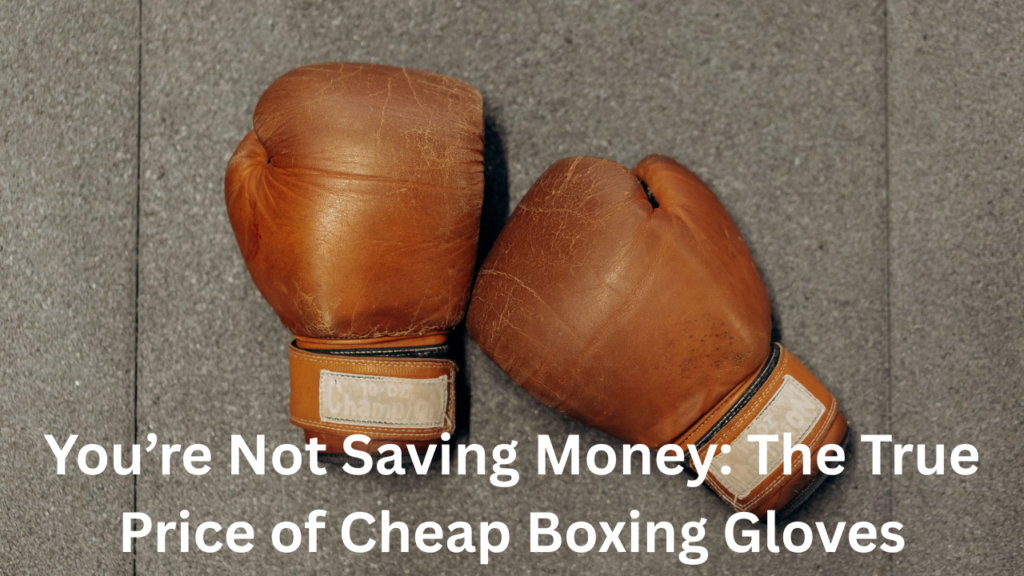
Walking into your first combat sports gym takes courage. You are surrounded by seasoned fighters, the sound of chains rattling on heavy bags, and a wall of equipment that all looks expensive. So when it comes time to buy your first pair of gloves, the instinct is understandable: find the cheapest option available.
If boxing or MMA turns out to be a passing phase, you have not lost much. If you stick with it, you can always upgrade later. This logic feels responsible. It feels financially prudent. But there is a quiet, accumulating cost hidden inside that bargain pair, and it is almost certainly higher than the price tag suggests.
The Mathematics of Cost Per Session
The sticker price of a pair of gloves tells you almost nothing about their true cost. What matters is the cost per session. Imagine two scenarios. In the first, a fighter buys an entry-level pair for a modest sum. The materials are synthetic, the stitching is basic, and the padding is a single layer of molded foam.
Training four times a week, this pair begins to show serious wear within three months. The inner lining tears. The Velcro loses its grip. The padding compresses into a flat, unprotective pancake. By month six, the gloves are functionally dead. The fighter buys another pair just like it. The cycle repeats.
A Mid-Range Pair of Gloves
Now imagine a mid-range pair made of genuine leather with multi-layered foam padding and reinforced stitching. The upfront cost is higher, perhaps double or triple the budget option. But this pair lasts two years of the same training schedule. Run the numbers.
The cheap option, replaced twice or even three times over two years, often costs more in total than the single, more durable pair. The fighter who could only afford the cheaper option upfront has actually spent more money, not less. This is the trap hidden in plain sight.
Where Budget Gloves Actually Break Down?
If you are going through hell, keep going. Winston Churchill
It is easy to blame the fighter for rough treatment, but the failure points on cheap gloves are predictable and structural. The stitching is the first to go. Budget manufacturers cut costs on thread quality and seam density. The thumb seam, the most stressed point on any glove, begins to fray. Once a seam opens, moisture enters the inner foam directly, accelerating degradation that cannot be reversed.
Velcro Wrist STrap
The velcro wrist strap is another silent failure point. Low-grade velcro loses its grip after repeated fastening. A strap that pops open mid-combination is not just annoying; it destabilizes the wrist at the exact moment of impact. Fighters compensate by gripping harder or altering their punch mechanics, creating bad habits that a coach then has to untangle. The glove is actively working against the training.
Inner Lining
Then there is the inner lining. Budget gloves often use a thin, non-breathable fabric that tears away from the foam within weeks. Once the lining separates, it bunches inside the glove, creating friction points that cause blisters and raw knuckles. A fighter distracted by pain in their hands is not focused on their footwork or head movement. The equipment has become the enemy of progress
The Padding Problem
Padding is the invisible heart of any glove, and it is where budget manufacturers save the most money. Cheap gloves typically use a single slab of low-density foam that compresses quickly and unevenly. Hot spots develop. Certain parts of the knuckle area go flat while other areas remain slightly cushioned. The fighter unconsciously adjusts their punch angle to avoid the painful spots, which ingrains poor technique.
Worse, once this foam is fully compressed, it stops absorbing shock. The force of every punch travels directly into the small bones of the hand and the wrist joint. The fighter feels fine until they suddenly do not. Stress fractures, wrist sprains, and the dreaded boxer’s knuckle injury can all trace their origins back to gloves that simply stopped doing their one essential job. The money saved on the initial purchase evaporates in an instant when a medical bill or lost training months enter the equation.
Hygiene and the Smell You Cannot Defeat

There is an unspoken hygiene reality with cheap gloves that goes beyond mere unpleasantness. Quality gloves typically include antimicrobial linings that resist the bacteria responsible for odor and skin infections. Budget gloves rarely do. The non-breathable lining traps moisture, creating a perfect breeding ground for staph and fungal spores. No amount of wiping or airing out seems to help because the bacteria have colonized the open-cell foam deep inside.
A glove that permanently smells foul is a glove that gets left in the bag. The fighter becomes reluctant to pull them out. They might skip a session. They might borrow gym gloves, which carry their own hygiene risks. The cheap pair, intended to lower the barrier to entry, has instead become a quiet demotivator. That is a hidden cost measured not in currency, but in lost momentum and missed training.
Making the Shift Without Guilt
None of this is said to shame anyone who currently owns budget gloves. Almost every experienced fighter started with an affordable pair, and many finished their first year of training perfectly well in them. The point is not to judge the past, but to inform the next purchase.
When those budget gloves eventually fail, and they will, consider replacing them with something built to last longer than the enthusiasm of a beginner. Look for genuine leather or high-grade synthetic leather with reinforced stitching. Check for multi-layered foam rather than a single molded slab. Seek out antimicrobial linings and a velcro strap that feels solid, not thin and scratchy.
The goal is not to spend the most money. It is to spend money once instead of repeatedly. Smart gear investment is not about brand loyalty or looking professional. It is about acknowledging that your training deserves reliable tools, and your body deserves protection that does not degrade without warning.
The cheapest gloves are rarely the ones with the smallest price tag. They are the ones you have to buy again and again and again.
FAQs
Q1. What are good cheap boxing gloves?
For reliable budget boxing gloves, the RDX F6 ($38-$40) and Everlast Core 2 ($30) are excellent, durable entry-level choices. If you can stretch your budget slightly, the Title Pro Mex or genuine leather Everlast Powerlock 2 gloves ($75-$100) offer professional-grade wrist and knuckle protection for rigorous bag work or sparring.
Q2. How much do normal boxing gloves cost?
Boxing gloves average between $40 and $150 for a quality pair used in training and sparring. Beginner synthetic gloves range from $20 to $40, while elite, genuine leather or pro-fight gloves can cost anywhere from $150 to $350 or more.
Q3. What gloves did Mike Tyson use?
In his prime, Mike Tyson primarily wore 8 oz and 10 oz boxing gloves from Everlast, which were the industry standard at the time. For his heavyweight fights, he often wore lighter 8 oz gloves to maximize his agility, punching speed, and power.